

The French Senate passed a bill that allows tax authorities to automatically exchange encrypted transaction data with their foreign counterparts.
The bill passed its first reading on Tuesday and was subsequently submitted to the National Assembly for consideration under Bill No. 3421.
The bill covers an agreement regarding the exchange of encrypted tax information, as well as updates to existing agreements concerning financial account information.
This encryption protocol is based on the 'Framework for Reporting on Crypto Assets' ( CARF ) established by the Organization for Economic Co-operation and Development ( OECD ). CARF sets unified standards for participating jurisdictions to collect and automatically exchange information on crypto transactions.
France has introduced an obligation to declare cryptocurrency transactions under its 2025 fiscal law to implement the amendments to the EU's Administrative Cooperation Directive regarding the declaration of cryptocurrency transactions, namely DAC8. According to these regulations, cryptocurrency service providers are required to report customer identities and transaction data to the tax authorities, which then share this information with the competent authorities in the users' countries of residence within the EU.
French legislators are also discussing adjustments to crypto taxation in the 2027 budget. On October 16, the National Assembly passed an amendment that proposes to include earnings from certain stablecoins pegged to the French franc in the taxable scope starting from January 1, 2027. This measure has not yet become law.
Legislators resumed debates on the budget revenue section on Tuesday, with a related vote scheduled for November 3rd.
The EU's plan to establish a database for encrypted tax information raises concerns about data security and "wrench attacks"
The lending agreement Morpho Global Public Affairs Director Faustine Fleuret stated that the tax declarations under DAC8 will share personal information among the tax authorities of EU countries, including names, addresses, tax IDs, and transaction volumes, thus raising concerns about data security.
She stated, "In a country where crypto holders have been subjected to physical attacks, a leaked list of 'who traded what and how much' is not just a privacy issue; it is first and foremost a security issue."
The European Commission plans to establish a central database for encrypted declarations by the end of 2026. Tax authorities in each member state will be able to access information related to their tax residents.
Fleuret indicates that storing this information in a centralized manner may create a 'single point of failure' for sensitive encrypted transaction data.
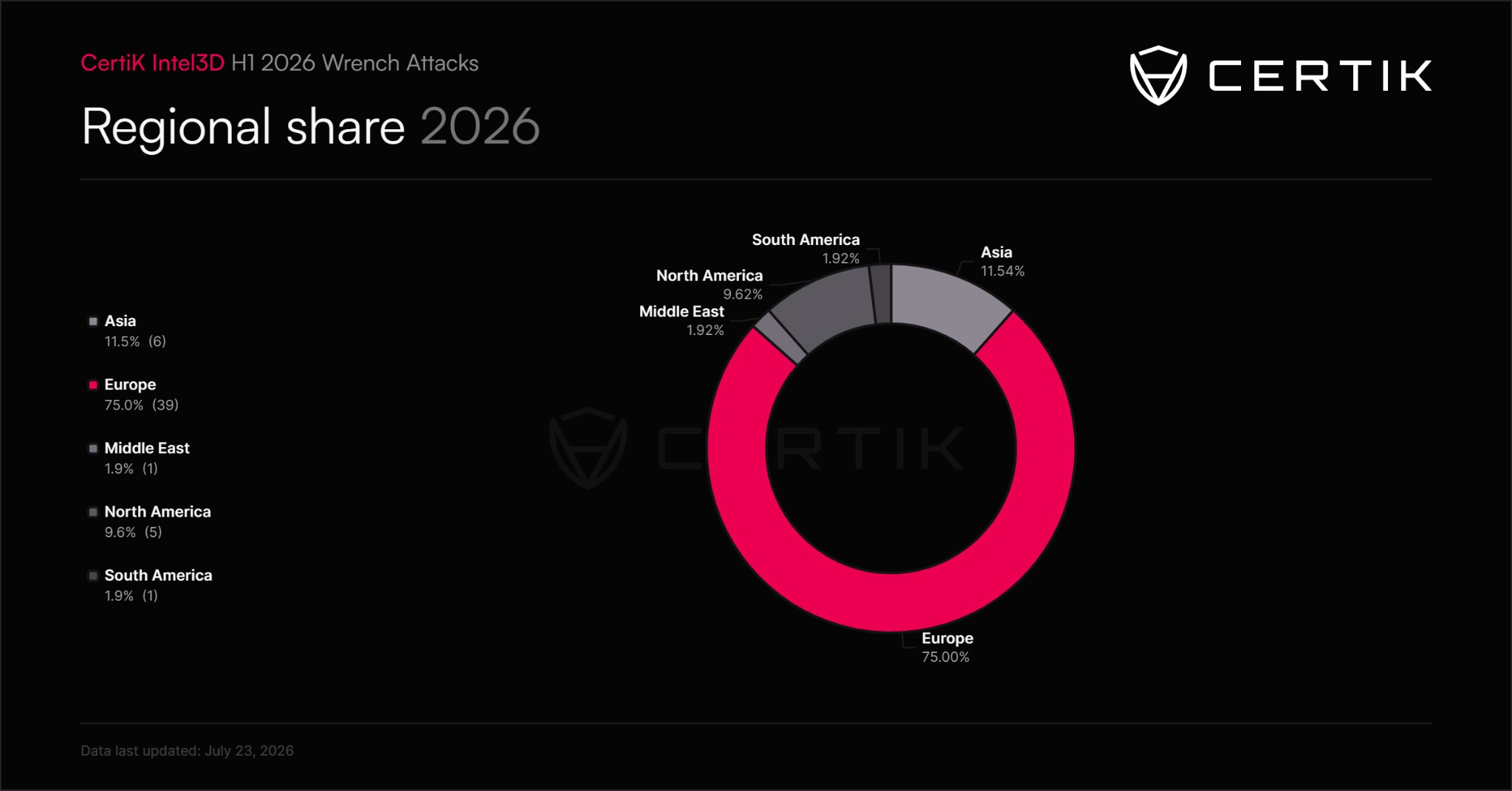
Comments from Fleuret come at a time when there has been a significant increase in personal attacks against cryptocurrency investors, a type of incident also known as "wrench attacks." Data from blockchain security company CertiK shows that in the first half of 2026, France accounted for 33 out of 52 verified wrench attack incidents worldwide.
In an incident in March of this year, a nearly 60-year-old couple in France was robbed by criminals posing as police, losing bitcoins worth approximately one million US dollars.