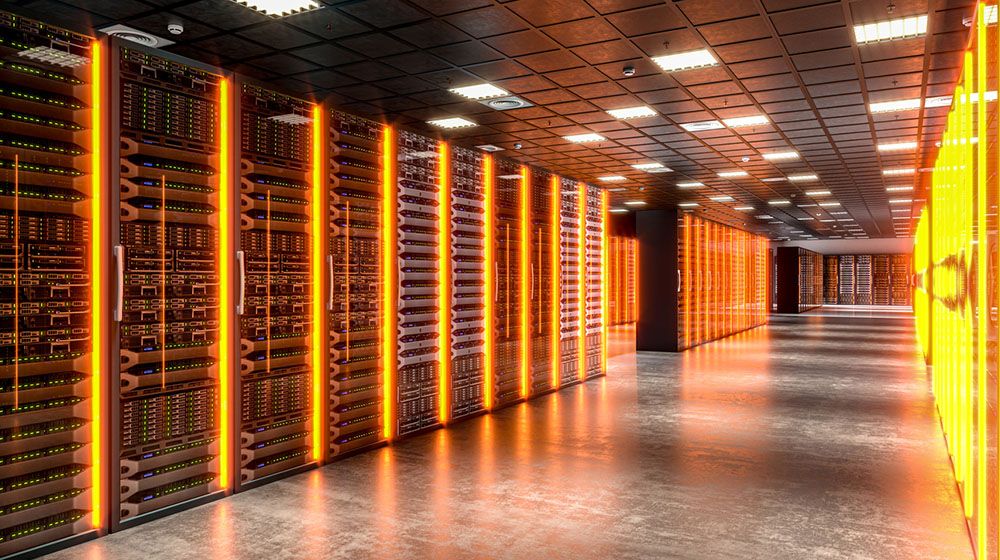


















Foreign media reports that, on the surface, the craze for AI data centers appears to be a competition in computing power, but at its core, it increasingly resembles a financing race. Building a large-scale data center park requires not only GPU, but also supporting infrastructure such as land, grid connection, power transformation equipment, cooling systems, fiber optics, and long-term power supply. The investment for a single project can reach tens of billions of dollars.
By 2030, the construction of AI infrastructure globally is estimated to require trillions of dollars in funding. Reuters previously mentioned that between 2026 and 2030, the related financing needs could reach 3.6 trillion dollars. The article argues that this means that the entities undertaking the risks of construction, lending, and holding long-term assets are often not the companies that train the models themselves.
There are only a limited number of people with sufficient cash.
The article points out that large cloud providers such as Microsoft can still rely on their own balance sheets to invest cash directly, but many smaller and medium-sized AI companies and cloud service providers do not have the same capability. They often need to invest billions of dollars in purchasing GPU and building data centers before projects start generating stable revenue, so they must rely on external capital.
Common practices include issuing corporate bonds and convertible bonds. Nebius announced a $4.5 billion convertible bond financing in August 2026, with some of the funds to be invested in AI's infrastructure business. The article argues that such instruments allow equity investors to indirectly participate in data center expansion as well.
Data centers are being treated as infrastructure assets.
The article states that the financing methods of ultra-large AI complexes are increasingly resembling those of power plants, airports, or toll roads. Developers typically establish special purpose entities that hold the land and physical facilities, and then raise funds from banks and private investors based on long-term leases.
For lenders, the key lies in predictable cash flows. If OpenAI, Microsoft, or large cloud service providers sign a lease agreement for 15 to 20 years, such contracts could support billions of dollars in debt. The park itself, the right to use electricity, and the equipment will also be included in the collateral.
The article cites an example where SB Energy, supported by SoftBank, is promoting a project for OpenAI in Ohio, USA. NVIDIA has agreed to provide up to $105 billion in credit support for the related leases and infrastructure of the park, and will also make direct investments in SB Energy. The park is designed to be scalable up to 8 gigawatts of power capacity.
NVIDIA's role is changing.
The article argues that one of the most unusual changes is that NVIDIA is shifting from being merely a chip supplier to taking on a dual role as both a supplier and a financing supporter. In addition to selling GPU, NVIDIA also invests in AI laboratories, infrastructure companies, and cloud service providers, and helps customers obtain financing through guarantees and other means.
The article states that this arrangement helps to increase hardware demand, as customers find it easier to obtain construction funds. However, the market has also begun to focus on a question: if chip suppliers also invest in customers, provide support for leases, and participate in project financing, then is some of this demand truly from the real market, or is it stemming from the financing capabilities of the suppliers themselves?
NVIDIA opposes describing this model as “circular financing.” However, the article mentions that these concerns have risen to a level that affect business arrangements, and NVIDIA has recently suspended revenue-sharing collaborations with some small AI cloud service providers.
The constraints may not be limited to chips alone.
The article also mentions that the construction costs of the AI data center are still on the rise. In addition to GPU, there have been shortages in supplies of memory, network equipment, transformers, and cooling systems. For some AI server systems based on the NVIDIA platform, the quotation increase has exceeded 15% due to rising memory prices.
With interest rates remaining high, financing costs have also risen accordingly. The article suggests that if the demand for AI continues to grow, Wall Street may regard data centers as a new category of infrastructure assets; however, if future AI revenues fall short of expectations, the risks will not be limited to tech companies alone but could also affect banks, bondholders, private credit funds, infrastructure investors, and suppliers providing guarantees.