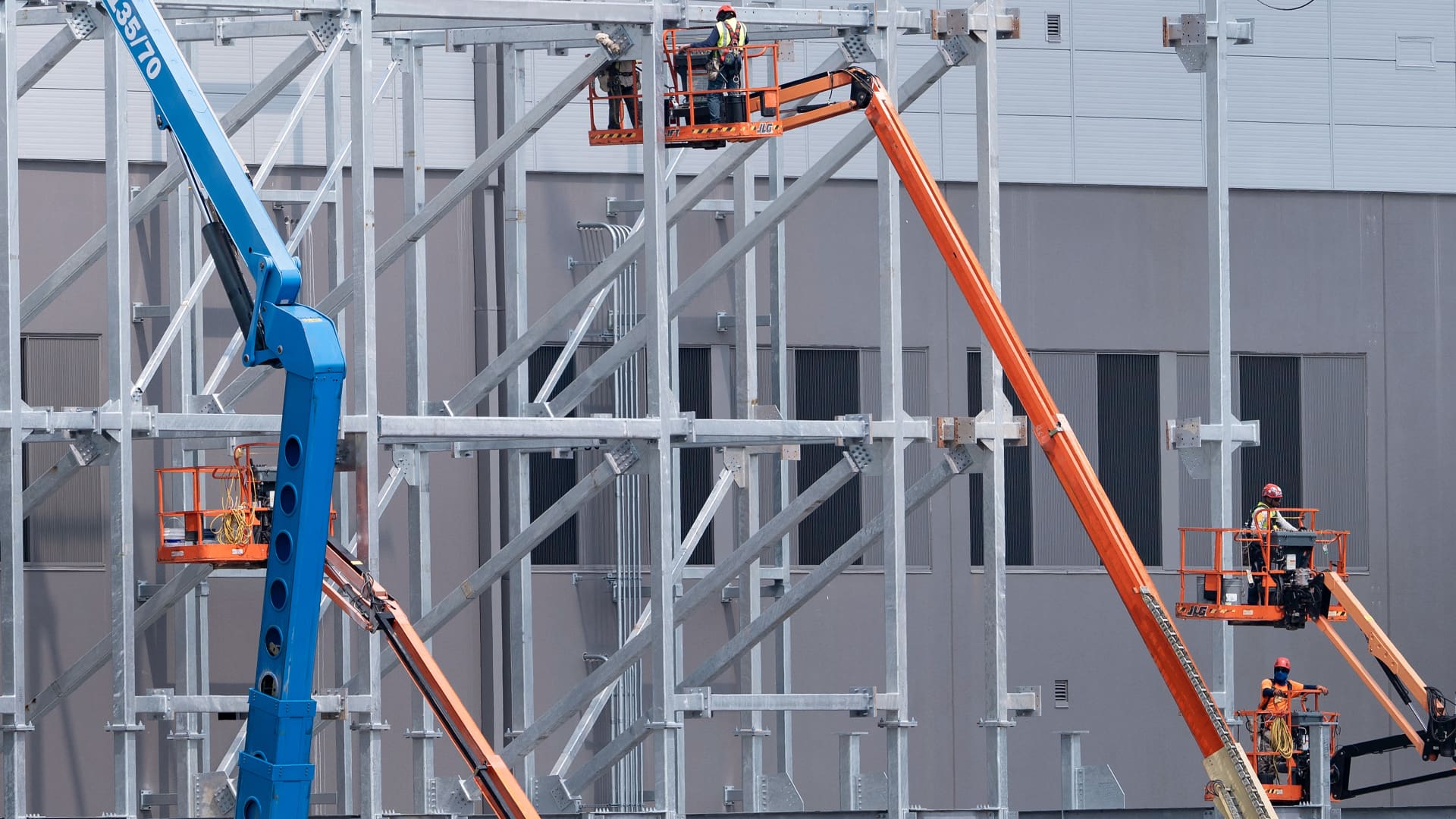



















Discussions in the UK regarding the construction of data centers centered around AI are shifting from focus on investment scale to consideration of actual returns. A latest report by the economic think tank Verdant indicates that the long-term number of jobs created by such facilities may be significantly lower than previously anticipated by the tech industry.
By 2035, only about 10,400 new long-term positions will be created.
Verdant It is estimated that by 2035, the data centers planned in the UK will create approximately 10,400 long-term operational jobs. This figure is only about a quarter of the 40,200 predicted by the UK technology industry organization techUK.
The institution also stated that there are approximately 4,400 positions directly supported by existing data centers in the UK, which is also significantly lower than the estimate of 24,300 given by techUK.
Verdant believes that when the UK government and industry experts previously supported the establishment of new data centers, they relied on widely cited industry data. However, these figures overestimated the number of jobs that could be sustained in the long term after the projects were implemented.
The disagreement focuses on the number of positions corresponding to each megawatt.
The core of the dispute between the two parties is the scale of employment corresponding to the unit capacity of the data center.
The calculation of techUK is based on the staffing and capacity of typical data centers, resulting in approximately 8.5 positions per megawatt. Verdant believes that this metric takes into account earlier, smaller-scale data centers more closely, and such facilities usually require more on-site personnel.
Verdant stated after reviewing the planning applications for 20 proposed data centers in the UK and the publicly available employment data that, on a capacity-weighted average, there are nearly 1.2 operational positions per megawatt.
The institution stated that the new generation of large data centers has a higher degree of automation, which will result in fewer permanent positions in the long term. It also pointed out that the higher estimates for techUK include off-site positions, such as those for contractors and personnel related to the supply chain.
The government and industry parties publicly refute
techUK responded that its data was based on industry information available at the time, and the calculation process was transparent, still reasonably reflecting the contribution of that industry to employment. The organization also stated that the sample size of Verdant was too small, and it only counted positions within the data centers, ignoring the significant external employment and service value supported by those data centers.
The UK government also refuted this report. A government spokesperson stated that the report's use of the indicator "number of jobs per megawatt" is misleading and that it incorrectly compares data centers with facilities such as hospitals and schools.
The spokesperson also stated that the report underestimated the broader economic value of computing power infrastructure and overlooked the significance of the UK's construction of critical digital infrastructure in terms of national security and technological sovereignty.
AI The construction trend continues to advance
Despite controversies over employment figures, the UK government continues to prioritize the expansion of AI infrastructure as a key policy focus. The UK has previously identified data centers as critical national infrastructure, emphasizing their importance to public services and economic activities.
On the enterprise side, Alphabet, Microsoft, Meta, and Amazon have collectively committed to investing nearly $700 billion this year in building specialized AI data centers. This has also prompted the market to re-focus on technical roles related to data centers.
Randstad A previous analysis of 50 million job listings showed that between 2022 and 2026, there was a 107% increase in demand for robot technicians within data centers; a 67% increase for cooling and HVAC system engineers; and a 51% increase for industrial automation technicians.
This means that the construction of the AI data center will indeed create new job opportunities, but these are likely to be concentrated during the construction period, in supporting services, and for specific technical positions, rather than the large-scale, long-term on-site positions as advertised by the industry.