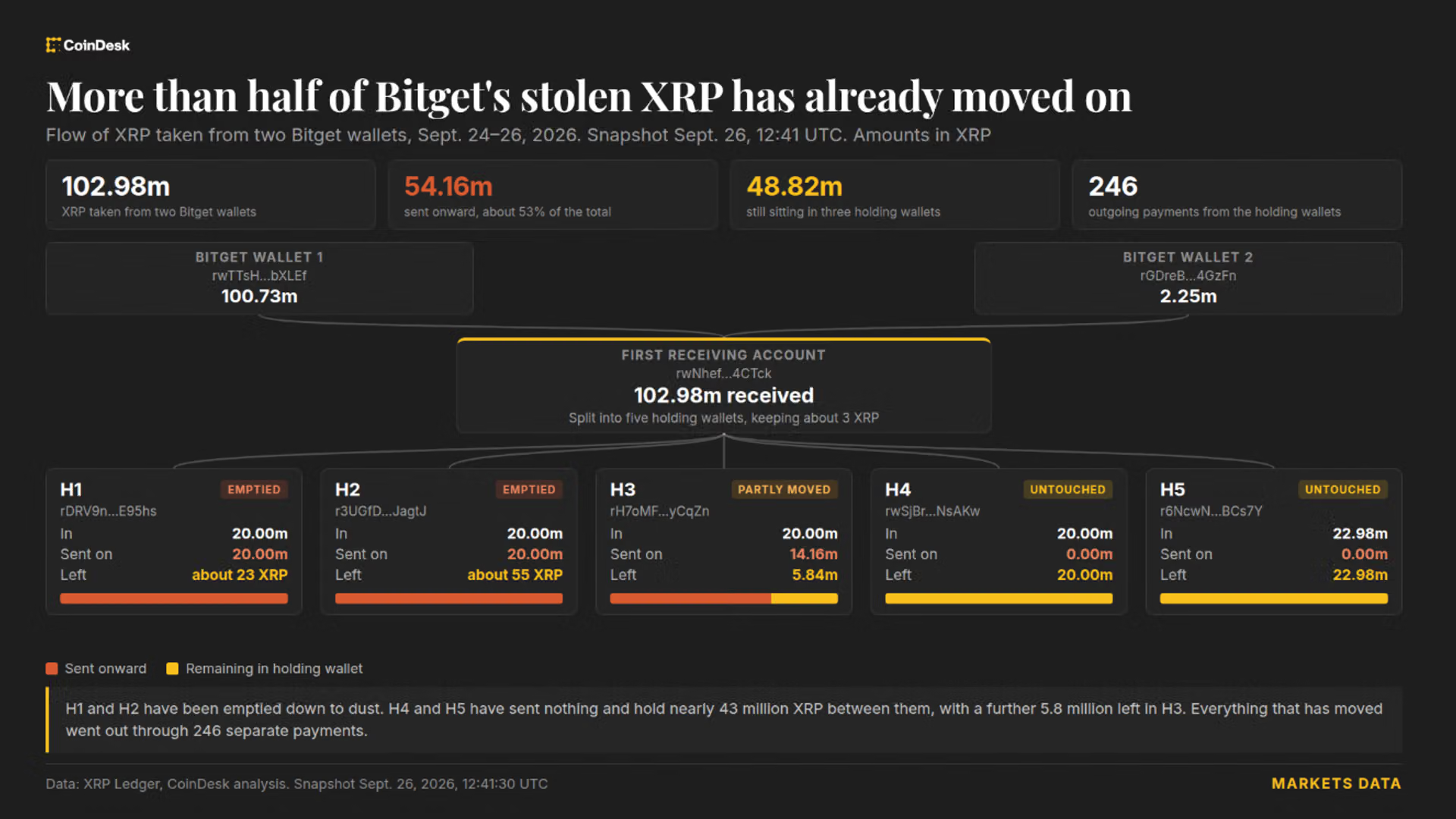

















According to CoinDesk, hackers related to Bitget have transferred approximately $83 million from three wallet accounts that contained cryptocurrency. Another $75 million remains in accounts that cannot be frozen according to the rules stipulated by XRP Ledger.
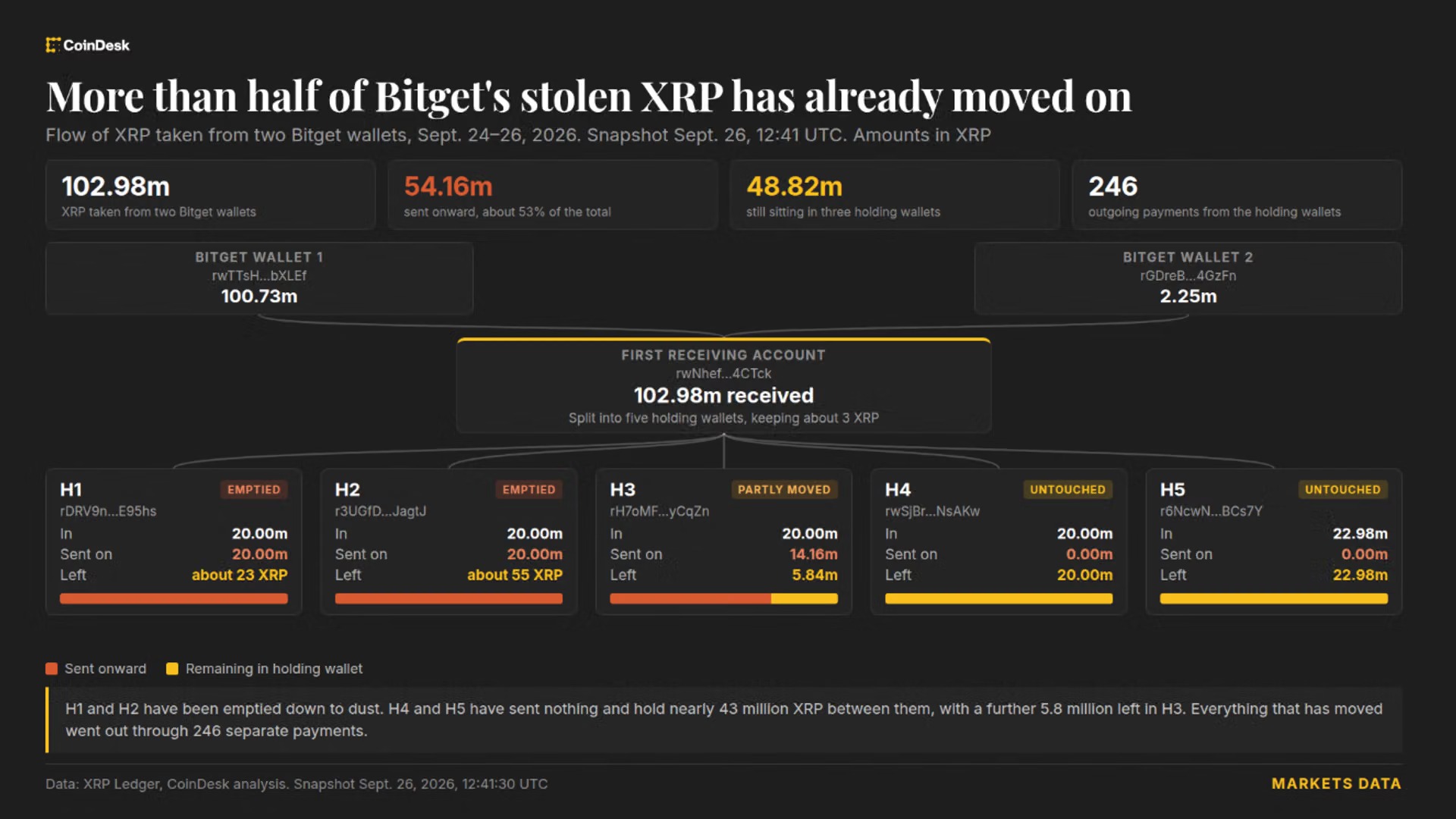
Reports indicate that the hackers who exploited a $387.5 million vulnerability, identified as Bitget, have transferred approximately $83 million from three wallet accounts, while around $75 million remains in accounts that cannot be frozen according to the current rules defined by XRP Ledger.
Exchanges can restrict accounts that have had their XRP stolen, but Ripple is unable to prevent transactions initiated by wallets controlled by attackers; Circle and Tether have each frozen approximately $320,000 in related stablecoins.
Bitget indicates that its protection fund will cover the losses, and the customer's balance will not be affected. The withdrawal service will be gradually restored from September 28th to October 2nd.
According to the review by CoinDesk of the records kept by XRP Ledger, nearly 103 million XRP that were stolen on Thursday from Bitget were distributed across five accounts. By 12:41 on Saturday, UTC, the balances of the two accounts, which initially each held 20 million XRP, had dropped to approximately 23 and 55 tokens respectively; the balance of the third account had decreased to about 5.8 million XRP.
XRP is the built-in currency of XRP Ledger, while XRP Ledger is the blockchain used by the payment company Ripple. This network allows companies to freeze the tokens they issue on the chain, but this permission does not apply to XRP itself. Ripple does not have a built-in mechanism to prevent attackers from spending these tokens.
This means that the recovery of funds depends, to some extent, on where the funds go next. Exchanges that have received the stolen XRP can restrict the receiving accounts and prevent withdrawals; however, as long as these coins remain in the attacker's control, they cannot be frozen.
The two companies, Circle and Tether, which issue tokens pegged to the US dollar USDC and USDT, have frozen approximately $320,000 in stablecoins related to this incident. Their tokens contain control features that allow the companies to blacklist addresses.
Read more: Circle and Tether intervened to freeze the hacker's wallet after the large-scale crypto heist in Bitget
The transfer of XRP accelerated at night. On Saturday at UTC time 04:32, there were still approximately 70 million tokens in the original five accounts; about 8 hours later, this balance dropped to 49 million tokens.
Some of the transfers followed the same path that had been used in the first wallet. After an attempt to transfer approximately 521,000 XRP failed due to insufficient funds in that account, the second account sent the same amount of XRP to the intended recipient about an hour later.
Currently, approximately 54 million XRP have been transferred out of the original holding accounts. Relevant transfers indicate that the attackers are dispersing the stolen funds across more wallets, but it is not clear how many of these have already been sold.
CoinGecko Data shows that on Saturday, XRP the trading price was around $1.54, which is a decrease of about 4% in the past 24 hours, but the weekly increase is still around 9%.
Calculated at this price, the initially stolen XRP is valued at approximately $160 million, which is about 4% of the token's daily trading volume of $4.4 billion. How much the price will be affected in the event of a sell-off depends on the availability of buy orders at that time.
Bitget On Friday, after including the Zcash and TRON transfers that were overlooked in the initial statistics, the total amount stolen was raised to 387.5 million US dollars. The company stated that the higher figure reflects the assets stolen in the original intrusion, rather than from another attack.

At the same time, the exchange subsequently confirmed that its protection fund could cover the losses, and customer balances remained unaffected. The Bitcoin withdrawal service was resumed on September 28, followed by Ethereum on September 29, USDT on September 30, and other tokens on October 2.