




Analysts say Binance's $100 million investment in Circle will boost the competition of stablecoins among USDC and Tether
CoinDesk
09-26 21:22
Ai Focus
Analysts said that the five-year cooperation between Circle and Binance may enhance USDC's presence in emerging markets and global trading, but Tether's advantages, stemming from its high liquidity and user habits, are unlikely to be shaken in the short term.
Helpful
No.Help

Analysts said that the five-year cooperation between Circle and Binance could give USDC greater momentum in emerging markets and global trading, and it may also put more pressure on Tether's long-term leading position in the competition for US dollar stablecoins.

Analysts said that Binance's $100 million stake in Circle and the cooperative relationship between the two parties provide a strong distribution channel for Circle, especially in markets where USDT is already deeply established.

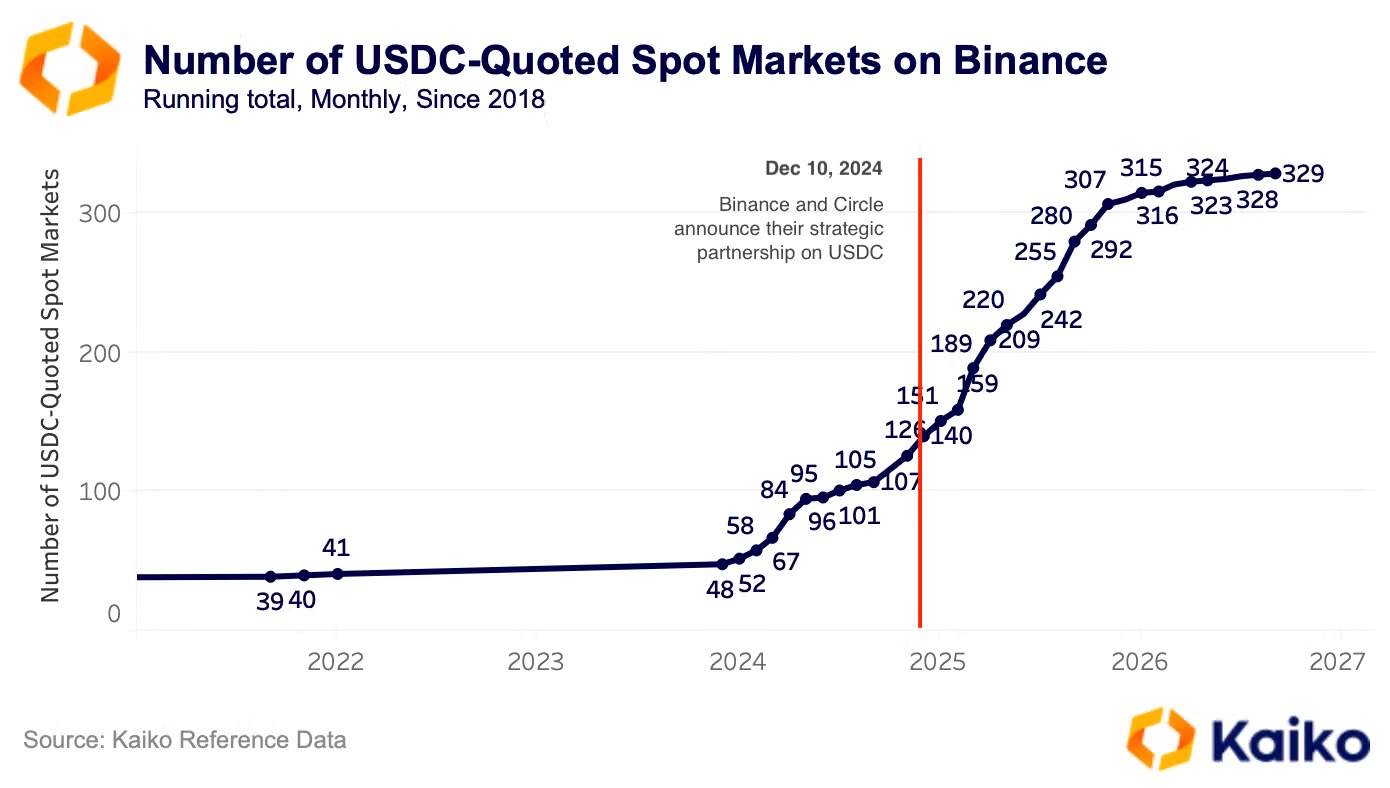
Kaiko data shows that since the two companies first collaborated in 2024, USDC's trading on Binance has significantly increased.

Binance has become an important trading venue for USDC.

The two companies first collaborated in December 2024, and this partnership has since changed the way USDC is traded on Binance.

According to Kaiko data, at the beginning of the collaboration, Binance provided 140 spot trading markets denominated in USDC; currently, this number has increased to 329. In contrast, it took until the end of 2024 for the number of markets to rise from 39 in 2021 to 140, indicating a significantly slower growth rate.
The monthly trading volume of USDC on Binance has also roughly doubled, rising from the range of $20 billion to $40 billion before the cooperation to continuously exceeding $80 billion.

According to Kaiko, the trading volumes of USDC on other major exchanges are still generally within the previous range, indicating that this increase is largely driven by Binance.

Melachrinos indicates that as Binance accelerates the coverage of USDC in emerging markets, this dominant position may further expand.

Places more pressure on Tether

The market value of USDC is approximately $74 billion, making it the second-largest US dollar stablecoin after Tether with a market value of around $140 billion and USDT.

Gravity Team, co-founder and CEO, and Martins Benkitis stated: "Both parties clearly have the motivation to leverage Binance's user base and infrastructure to drive the growth of USDC."

Circle is also expanding its business beyond the issuance of stablecoins. Its Circle Payments Network aims to connect financial institutions for stablecoin payments; while its recent announcement to acquire Tazapay, headquartered in Singapore, for $400 million will add local bank relationships and payment channels in emerging markets.

At the time this strategy was introduced, the competition in stablecoins was no longer limited to Circle and Tether. Banks and payment companies such as Visa, Mastercard, and Stripe were also further deploying stablecoin payments and infrastructure.

Benkitis means: "This will bring greater pressure to USDT, especially in global trading and emerging markets – where USDT has established a very strong position over the years. However, relying solely on distribution channels will not change this overnight. USDT has a deep range of trading pairs and local liquidity, and more importantly, people have already gotten used to using it."

Tip
$0
Like
0
Save
0
Views 48
HKWDB reminds readers to view blockchain rationally, stay aware of risks, and beware of virtual token issuance and speculation. All content on this site represents market information or related viewpoints only and does not constitute any form of investment advice. If you find sensitive content, please click“Report”,and we will handle it promptly。
Submit
Comment 0
Hot
Latest
No comments yet. Be the first!
Related
Will the encryption of “Uptober” reappear? Analyzing the strongest months in history
Although “Uptober” is one of the most well-known seasonal patterns in the crypto market, October 2025 reminded the market that not all Oktobers are upward trending. Bitcoin reached a record high that month, only to see a decline of about 4% later on due to new Sino-US trade disputes that triggered risk aversion and large-scale liquidations. Looking at history, from 2013 to 2025, there were 10 October months with positive returns for Bitcoin, averaging around 19%; however, October 2026 began under different circumstances, with increased inflows of ETF, short covering, and improved liquidity, which drove Bitcoin and various altcoins stronger.
U.Today
·2026-09-28 16:41:25
3
Will SoFi switch its $25 billion card business to its own stablecoin cause Ripple concern?
According to the announcement from SoFi, the project is expected to process over $25 billion in transactions annually. Settlements have been facilitated through the Mastercard global payment network, with SoFiUSD serving as the underlying digital settlement asset. The article mentions that this development raises a competitive issue regarding Ripple and RLUSD: if regulated large banks can issue their own stablecoins and directly connect to the global payment network, will there still be a need for third-party stablecoins for settlement?
Coinpaper
·2026-09-28 16:25:14
7
JPMorgan Maintains 'Overweight' Rating on Boeing, Says 737 MAX Software Issues Have Limited Impact on Current Deliveries
JPMorgan maintains a 'overweight' rating on Boeing and a target price of $290, believing that the recently disclosed issues with the 737 MAX flight control software are unlikely to have a significant impact on the delivery of the MAX 8 and MAX 9 models at present. However, there are still potential risks for the delivery of the MAX 7 and MAX 10 models in 2027.
The Block
·2026-09-28 16:25:12
8
After Buffett's purchase price was broken through, has Google really become cheaper? | Silicon Valley Observation
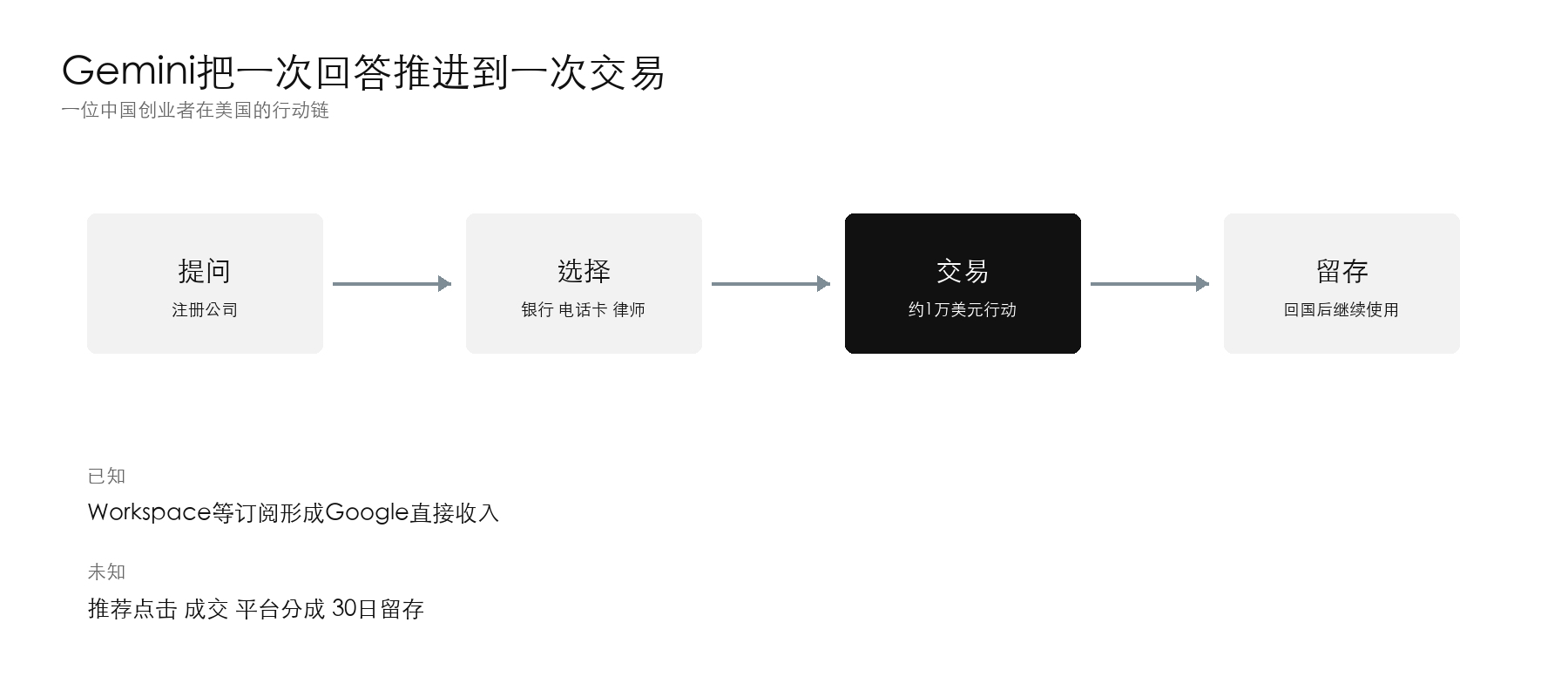
This article argues that the key to determining whether Alphabet is a good deal lies not in Berkshire Hathaway's purchase price, but rather in whether the company's annual capital expenditures of nearly $200 billion can be transformed into sustainable cloud profits and a new generation of business distribution rights. The article discusses whether Google is transitioning from a search advertising company to an AI infrastructure and action distribution platform, by considering Berkshire Hathaway's investments, Alphabet's financing and capital expenditures, Google Cloud's revenue and profit performance, as well as a case study of an entrepreneur using Gemini to accomplish real-world tasks.
The Block
·2026-09-28 16:25:11
9
Jensen Huang refutes Hinton's AI doomsday theory: I love him, but I hate his predictions
NVIDIA CEO Jensen Huang recently refuted in an interview the predictions of Nobel laureate Geoffrey Hinton that the loss of control over AI could lead to social collapse, stating that such claims have no scientific basis and will only create panic. He said that continuously highlighting the threat of AI may make young people pessimistic about the future and even affect their expectations for education and employment.
The Block
·2026-09-28 16:02:33
15
View More